
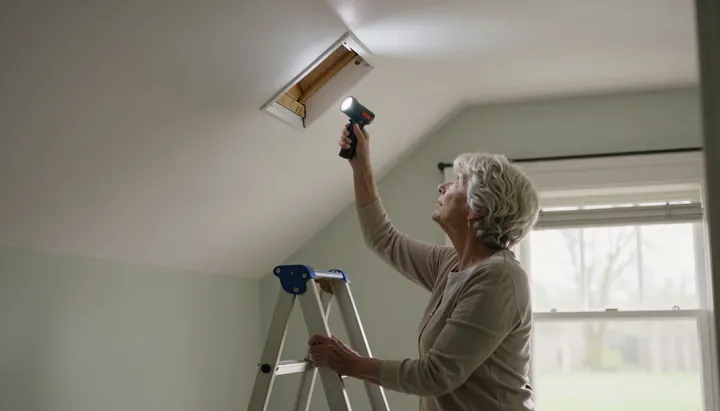
You pull the cord, the loft ladder slides down, and the beam of your torch lands on a box. On the side, in your own handwriting, it says "Kitchen, misc." You have no idea what is inside. And you have no idea when you last looked.
If the house is going on the market, that box is one of hundreds. This guide shows you the five rooms to empty first, in the order that saves the most energy, and the simple set-up that makes every room go faster.
The player loads from YouTube (privacy-enhanced mode) only when you press play. Watch it on YouTube.
Why the order matters
Most people start in the wrong place. They begin in the living room, because it's where they sit, or with the photographs, because those feel most important. Within an hour they're tired and tearful, and nothing has left the house.
There's a better rule: start where the volume is highest and the feelings are lowest, and finish where the feelings are highest. That way you build your deciding muscle on easy things, before you need it for the hard ones.
There's a second reason, and it's practical. The rooms you rarely enter are the rooms buyers will open. A cluttered loft, a garage you can't walk through, a spare room full of boxes: they all make a home look smaller and harder to love.
And there's a third. Your living room and your bedroom are where you rest. If you keep those two calm and lived-in until near the end, you always have somewhere to recover after a sorting session.
If you're finding it hard to start, you're far from alone. Researchers looking at a large survey of older Americans found that after the age of seventy, roughly three in ten people had done nothing at all in the past year to clear out, give away or donate things.1 Things simply build up. That's normal, not a failing.
Before you open a single box: the sorting station
Before you go room by room, set up one sorting station near the front door: a hallway, a dining table, part of the garage. This is where every decision lands. It has five zones: Keep (for the new home), Family (to offer to children or relatives), Donate, Sell, and Recycle or Discard.
Then add one more box and give it a name: Decide Later. Write a date on it in marker pen, about four weeks from today. Anything you truly can't decide goes in there, and you keep moving. When the date comes, you open it and decide with fresh eyes.
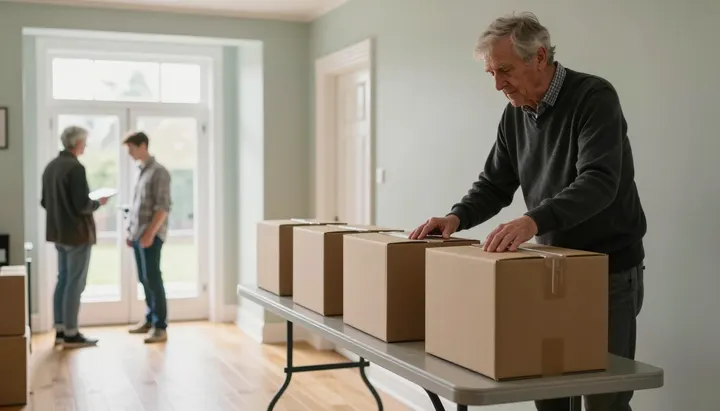
How long will the whole house take? In one study of older people who had moved to smaller homes, most households were cleared within three months, and two months was the most common.2 Your timing may differ, but it's a useful picture: this is a season of work, not a lifetime.
Room one: the loft or attic
The loft or attic comes first. It usually holds the most, it's the least sentimental per box, and it's physically the hardest. So do it while your energy is fresh, and never do it alone: ask a family member, a neighbour or a paid helper to do the climbing and the carrying. Your job is to decide, not to balance on a ladder with a box of old magazines.
Bring everything down to your sorting station, a few boxes at a time. Don't sort in the loft itself. It's cramped and poorly lit, and you'll be tempted to push things back into the corner.
For each item, ask one question: if this were in a shop today, would I buy it for the new home? Not "might it be useful one day", because the answer to that is always yes. Would you choose it again, now, for the life you're moving into?
Lofts tend to hold the same few things: old lamps and curtains, suitcases, decorations for every holiday, boxes from appliances long gone, and things kept "for the children". The appliance boxes can go straight to recycling. Of the decorations, keep one box of your favourites.

As for the things kept for the children, put them straight in the Family zone. Don't decide for them. That comes in room three.
With the loft clear, the heaviest room in the house is behind you.
Room two: the garage, shed or basement
Next comes the garage, the shed or the basement. This is the room of "just in case": three half-full tins of paint, four hammers, two lawnmowers, a bicycle nobody has ridden in years.
The method here is one of each. Lay out every tool of the same kind together: all the hammers, all the screwdrivers, all the saws. Keep the best one of each that you'll actually use in the new place, and offer the rest.
Think hard about the garden, too. If the new home has a small patio or a balcony, you won't need a full-size mower, the long hedge-trimmer or forty plant pots. Keep a few hand tools and two or three good pots, and let the rest go to someone with a garden.
Paint, oil, garden chemicals and old batteries need care. The rules on how to get rid of them differ from place to place, so check with your local council or municipality before you put anything in a bin.
Garages are also where good, usable things live: ladders, workbenches, bicycles, camping gear. These are often easy to give away. Neighbours, community groups and local workshops are usually glad of them. It's much easier to let a tool go when you know someone will use it next week.

Room three: the spare bedroom
By now you've cleared two big spaces, and you'll be faster. Take a moment to notice that: it's genuinely hard work, and you've done it.
Room three is the spare bedroom, or the children's old rooms. In many homes these have quietly become museums: school certificates, sports trophies, a guitar, boxes of toys, and clothes that haven't been worn for twenty years.
The key here is that much of it isn't really yours to decide. So don't. Hand the decision back, with a clear date. You might send a message like this:
"We're getting the house ready to sell. I'm clearing your old room by the end of next month. Anything you'd like to keep, please collect it or tell me by then. After that, I'll decide what happens to the rest, and I won't be upset either way."
That last line matters. It gives your children permission to say "I don't want it" without guilt. Send the same message to everyone, at the same time. That keeps it fair, and nobody hears the news second-hand.

While you wait for replies, deal with the rest of the room. Bedding is a good place to start. Count the beds in the new home, keep two sets per bed, and donate the rest. Animal shelters are often glad of old towels and blankets.
Then ask a frank question about the guest bed itself: will the new home have a guest room? If not, the bed, the bedside table and the spare wardrobe can usually go. Every large piece you sell or give away now is one less thing to move, store or worry about.
Room four: the kitchen and dining room
Room four is the kitchen, together with the dining room if you have one. This is where duplicates hide: three sets of mugs, five frying pans, two slow cookers, and a cupboard of serving dishes for twelve people.
Start with two questions. How many people will you cook for, most days, in the new home? And how many will you host on the busiest day of the year? Keep enough for that, plus a little spare. Everything else is surplus.

A useful trick is to empty one cupboard completely onto the table. Seeing everything at once makes duplicates obvious. Pick the best of each type, put them back, and move the rest into your zones. Then do the next cupboard.
Then there's the good china, the crystal glasses and the silver that came out at Christmas. These are often the hardest things in the kitchen, because they carry family occasions. Put them in the Family zone for now, and ask before you decide. You may be surprised by the answers, and that's exactly what our next guide, on what your children actually want to inherit, is about.
Before you finish, measure the cupboards in the new kitchen if you can, or ask for the floor plan. Space is the real limit. A new kitchen with half the cupboards means half the contents, however much you love them.
Room five: the study and the paperwork
Room five is the study, or wherever the paperwork lives: a desk, a filing cabinet, a drawer in the sideboard. It comes last because it's slow, and because it holds both the dull and the deeply personal.
Sort paper into four piles:
- Active: papers you'll need in the next few months, including anything to do with the sale and the move.
- Records you may need to keep.
- Memories: letters, cards, children's drawings, certificates.
- Can go.
The active folder deserves special care. Give it a bright colour, keep it in one place, and make sure someone you trust knows where it is. During a move, the most important papers are the ones that get packed into a random box by mistake.
And photographs? Here is the strongest piece of advice in this guide: don't sort them now. Gather every loose photo and album into a few sturdy boxes, label them clearly, and move them to the new home as they are. Sorting photographs takes time and feeling, and you don't have much of either to spare right now.
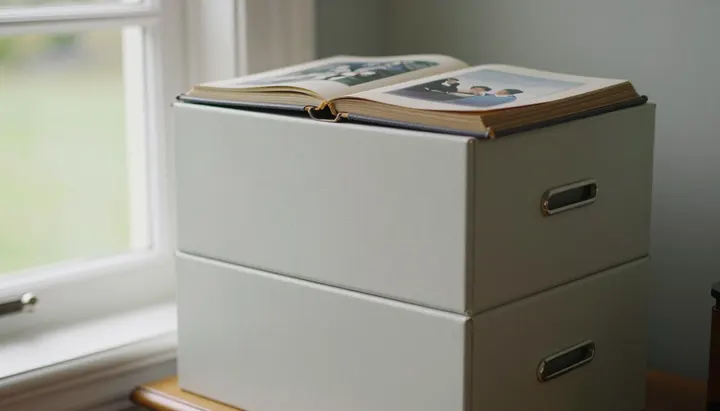
Letters, cards and keepsakes can join them in a single "memories" box. Sorting sentimental things gently deserves its own time, once the move is behind you.
What's left, and the rooms you live in
When the five rooms are done, look around. The living room, the main bedroom and the bathroom are still yours and still calm, and most of the hidden volume has gone. This is when the house starts to look like somewhere a buyer could imagine living.
You'll still need to sort the rooms you use every day, but now with practice behind you, a smaller house to think about and a clear idea of what fits in the new place. Those rooms usually go much faster than people expect.
If your estate agent (or real-estate agent) has advice about presenting the house, listen to it. They know your local market.
Here is how it might look in practice. Imagine a couple, Anna and Peter (they're made up), with a four-bedroom house and a two-bedroom flat waiting for them. They give themselves ten weeks:
- Weeks 1 and 2: the loft, with their son doing the ladder.
- Weeks 3 and 4: the garage and the shed.
- Week 5: the spare rooms, after the message to the children.
- Weeks 6 and 7: the kitchen.
- Week 8: the study.
- Weeks 9 and 10: the rooms they live in, with some slack for the days nothing goes to plan.
Your house and your pace will be different. But the order (loft, garage, spare room, kitchen, study, then the rest) works in almost any home.
Your next step this week
A house holds a whole life, and it's natural for clearing it to feel like a lot. But you don't have to do it all at once, and you don't have to do it in the hardest order. Start high and dusty, and finish with what matters most.

Which room in your house do you dread the most? Tell us in the comments under the video on YouTube. You may find you're not the only one.