
Sunday lunch. You nod towards the big dresser and say, "That'll be yours one day." Your daughter smiles, says "Lovely," and asks if there's more gravy. And part of you wonders: does she actually want it?
This guide looks at what grown-up children usually treasure, what they often don't, and how to ask them without anyone feeling hurt.
The player loads from YouTube (privacy-enhanced mode) only when you press play. Watch it on YouTube.
Why the mismatch happens
In many families, parents have carefully looked after things for decades, believing they are holding them for the next generation. Then the next generation, very gently, says no thank you. There are usually four reasons.
Space. Many adult children live in smaller homes than the ones they grew up in. There is often simply no wall for a large sideboard or a glass cabinet.
The way people live now. Fewer families hold formal dinners for twelve. Many people move house several times, sometimes for work, sometimes across the country. Heavy furniture and boxes of fragile glass are hard to carry through that kind of life.
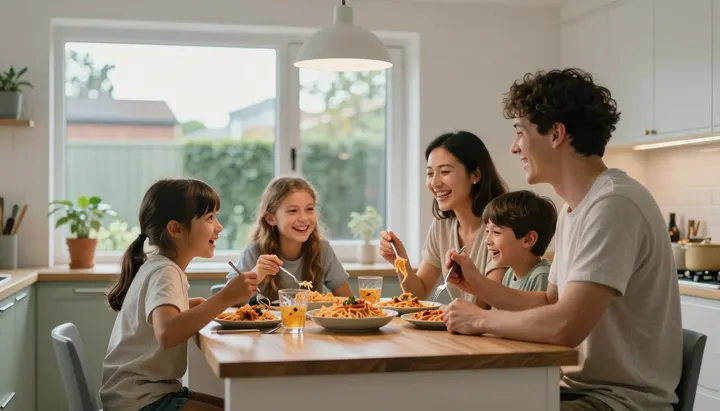
Taste. Every generation decorates differently. Dark polished wood, matching dinner services and ornaments on every surface were once the height of good taste. Today many younger people prefer lighter, simpler rooms. That's not right or wrong, just different.
Memory. This is the most important one. The meaning of an object often lives in your memory, not in the object. When you look at the dresser, you see your mother's kitchen. Your daughter may just see a large piece of furniture.
Why we value our own things more
A well-known piece of research helps explain this. In experiments published in 1990, some people were given an ordinary coffee mug and others were not. When the owners were asked to sell their mug, they wanted roughly twice as much for it as the others were willing to pay for exactly the same mug.12 Simply owning something makes us value it more.

Economists call this the endowment effect. And if a few minutes of owning a mug can do that, imagine what forty years of owning a dining table can do.
So when your children hesitate, it doesn't mean they don't love you or don't respect the past. They are seeing the object without your forty years of memories attached. That is the key to everything that follows.
What children often treasure
So what do adult children tend to treasure? In many families, the answer is smaller and more personal than parents expect.
- Handwriting. A recipe card in your writing, a birthday card, a note in the margin of a cookbook. These are small, easy to keep, and they carry your voice in a way nothing else does.
- Photographs, especially labelled ones. A box of unlabelled faces is a puzzle. A photo with names and a date on the back is a piece of family history.
- Everyday objects that were part of you. The bread knife you always used. The teapot. The garden trowel. Your reading chair. What people want is often not the best thing in the house, but the thing that makes them think of you at once.
- Good practical things in the right size. A decent toolkit, a sewing machine, good kitchen knives, or a small piece of furniture that fits a modern room.
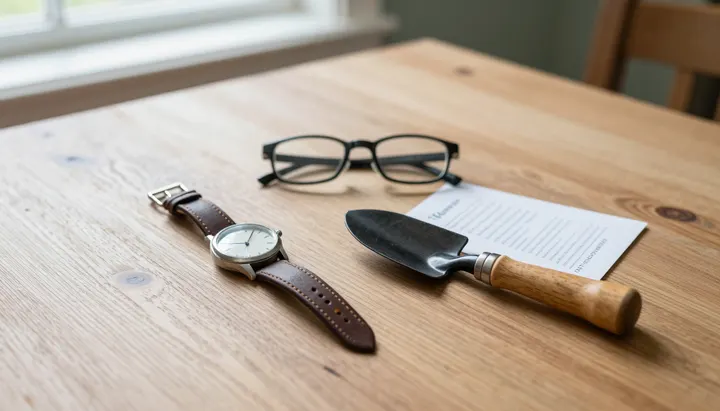
And above all, stories. Many families find that the thing they wish they had asked for is not an object at all: how you met, how the family came to live where it does, what your own parents were like. Those can't be bought, and once they're gone, they can't be found again.
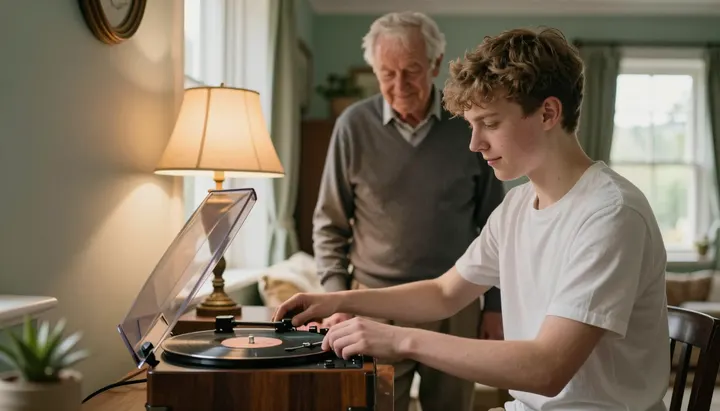
Don't forget the grandchildren. They sometimes want quite different things from their parents. A teenager may love the old record player, the camera, or the denim jacket from the back of your wardrobe: things your own children walked past for years. A young adult setting up a first home may be very glad of a set of plates, a lamp or a small table. So when you ask, include them too, in a way that suits their age.
What children often don't want
Now the other side, and please read this kindly. In many families there are some kinds of things that adult children often find hard to take:3
- Large, dark, heavy furniture: big wardrobes, sideboards, formal dining sets and display cabinets. They are often well made, which is exactly what makes them hard to say no to. But they need rooms most younger people don't have.
- Formal china, crystal glasses and silver-plated serving pieces. Many families now use them once a year at most, if at all, and they need careful storage and hand-washing.
- Collections: figurines, decorative plates, spoons, stamps, dolls. To the person who built it, a collection is years of searching and pleasure. To someone else, it can feel like a responsibility they never asked for.
- Practical leftovers: sets of encyclopaedias, linens for beds nobody owns any more, old electronics and boxes of paperwork.
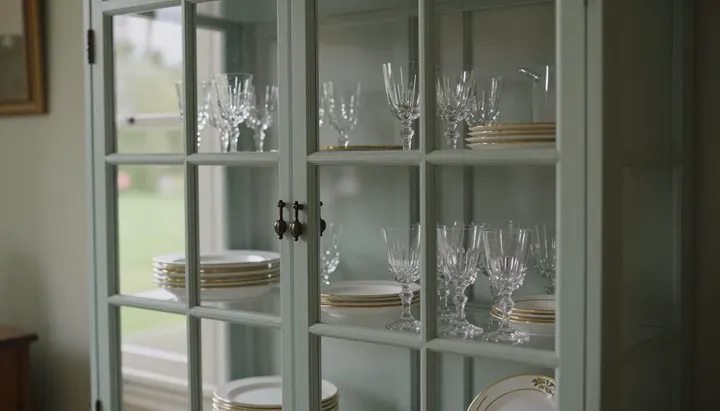
None of this means these things are worthless. It means the right home for them may not be your children's home. Knowing that early gives you time to find someone who will actually use and enjoy them, rather than leaving the decision to others later.
When the answer is "nothing"
Sometimes you ask, and the answer is: nothing, really. That can hurt. It can feel as though your home, and the years you spent making it, didn't matter.
It's worth sitting with that feeling for a moment rather than pushing it away. Then try to see it a different way. Your children are saying something about their homes and their lives. They aren't saying anything about your love, or your past.
One gentle request often helps: ask each child to choose just one thing. Not a big piece, just one object, however small, that they would like to keep. Almost everyone can find room for one thing, and choosing it usually starts a conversation.
Then look for the right homes for the rest. A sideboard can go to a young couple furnishing their first home. A collection can go to a club of other collectors. Old photographs of your town may interest a local history group or museum. Things don't have to stay in the family to be loved, and knowing that something is being used and enjoyed somewhere is often a quiet comfort of its own.
How to ask: the conversation
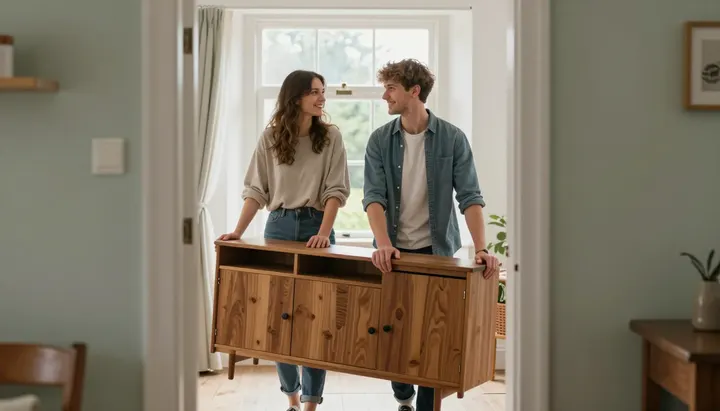
How you ask makes all the difference. The common mistake is to ask about one particular object: "Do you want the china?" That puts your child in a tight spot. Saying no feels like rejecting you, and saying yes may mean a box they keep, unopened, for the next thirty years.
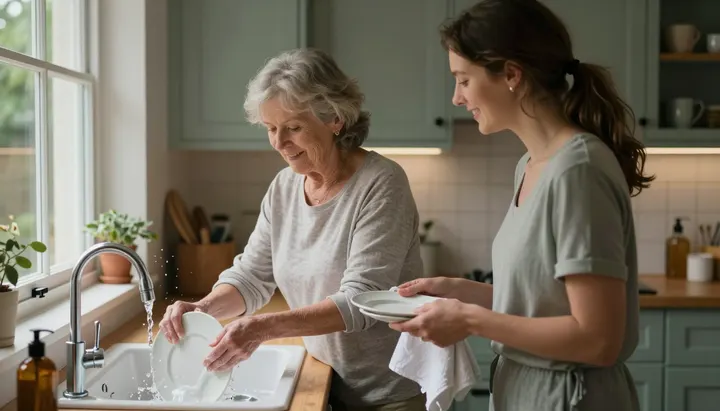
Timing matters too. Avoid big family occasions, when everyone is busy and emotions run high. A calm, ordinary day is better. And many people find that talking side by side (on a walk, in the car, while washing up) is easier than sitting face to face.
Keeping it fair between siblings
If you have more than one child, a little structure keeps things fair. One of the most common sources of family hurt is the private promise.
Imagine a mother (we'll call her Margaret, but she's made up) with three grown-up children. Over the years she has told two of them, separately and lovingly, "The clock on the mantelpiece will be yours." Neither knows about the other. It's a very easy mistake to make.
The way to avoid it is simple: say the same thing to everyone, at the same time. A family video call, a group message, or a gathering at the house, so that everybody hears the same plan.

Some families put coloured stickers on the bottom of things instead. Whatever you choose, it's worth saying out loud that fair doesn't always mean identical. One child may live nearby and use the garden tools every week; another may live abroad and want only photographs. That's fine, as long as everyone understands why.
If anything is valuable, mentioned in a will, or could raise questions about money, step back from the kitchen table and speak to a qualified adviser. The rules differ by country, and it's worth getting them right.
The story card
Here is perhaps the most useful thing you can do, and it costs nothing. For each object that really matters to you, write a story card. It answers three questions in three or four sentences:
- What is it?
- Where did it come from?
- Why does it matter to you?
For example: "This clock belonged to my father. He wound it every Sunday evening before the news. I can't hear it tick without thinking of him."
Tie the card to the object, or tape it underneath, and keep a copy in a folder too. If writing isn't easy for you, record yourself telling the story on a phone. Hearing your voice may mean more than any card.
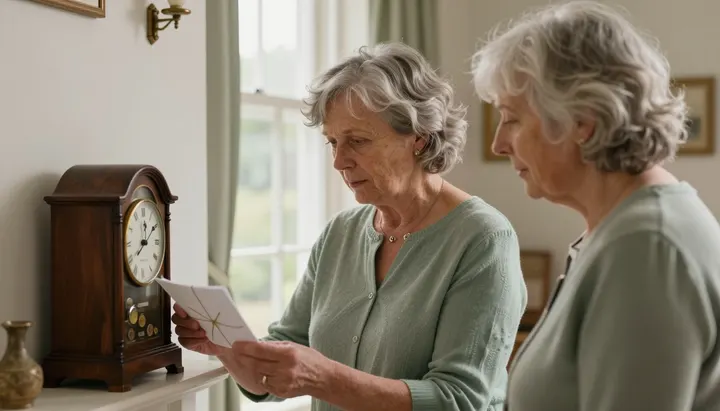
Something often happens once the story is written down: the object becomes easier to let go of, because the story is safe. And sometimes the opposite happens: a child reads the card, and suddenly they want the clock after all.
If you'd like to go a step further, invite the family round for a story afternoon. Walk slowly through the house together, and let each person pick up something they remember and ask you about it. If everyone is comfortable, record it on a phone. You may be surprised how many stories come out that nobody had heard before, and those recordings are something every one of your children can keep without needing a single extra shelf.
Giving now, rather than later
You don't have to wait. Many people find real joy in giving things while they are alive to see them used. Seeing your granddaughter use your sewing machine, or your son cook with your old cast-iron pan, can be far happier than imagining it. And it means your children can ask you questions about the things you've given them.
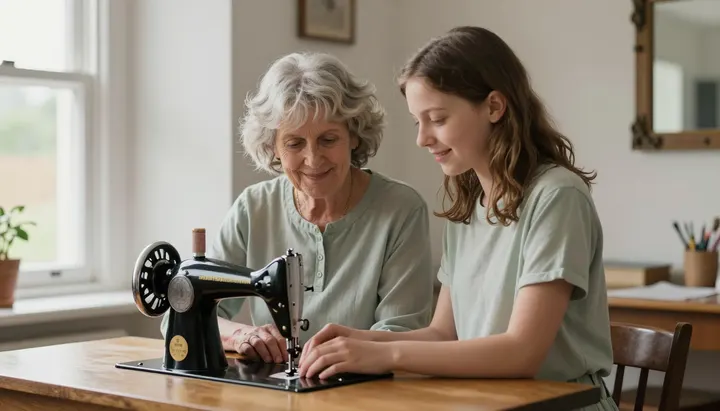
There may be rules about gifts in your country, especially for anything of real value, so check with an adviser where it matters. But for most everyday things, giving early is simply kind. Start small: next time a child or grandchild visits, have one thing ready to give them, with its story card attached.
Your next step this week
What your children will treasure most is rarely the most expensive thing in the house. It's the sense of you: your handwriting, your voice, your stories, the cup you always drank from. Those can travel light.
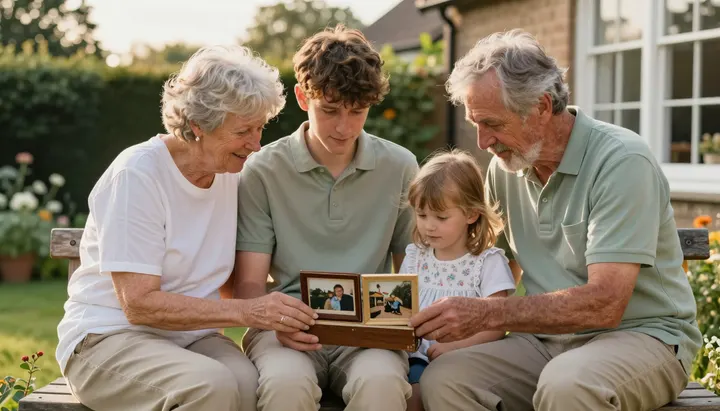
What's the one thing you hope someone in your family will keep? Tell us in the comments under the video on YouTube.