
You open the drawer to look for the scissors. Instead, you find a pair of tiny knitted baby shoes. Forty minutes later, you're still sitting on the bedroom floor, holding them.
If that has happened to you, you already know that sentimental things are the hardest part of downsizing. This guide explains why, and offers a gentle way to keep the memory without keeping everything, including a box for the things you can't decide about today.
The player loads from YouTube (privacy-enhanced mode) only when you press play. Watch it on YouTube.
Why it hurts, and why that's normal
Let's start with something important. If you find it hard to part with sentimental things, there is nothing wrong with you. It isn't weakness, and it isn't silly.
Objects become part of who we are. A teacup isn't only a teacup: it's the morning ritual you shared with someone. A child's drawing is that child at five years old, kneeling at the kitchen table.
Researchers who study why people keep things have suggested that what we're really afraid to lose isn't the object. It's the part of our identity, and the memory, that the object carries.1 Grief researchers say something similar. Since the 1990s, many have described what they call "continuing bonds": staying connected to someone we've lost is a normal, healthy part of grieving, not a failure to move on.3
It also helps to notice what kind of sentimental thing you're holding, because there are usually three, and each has its own question:
- Things that remind you of a person. Which one or two things say the most about them?
- Things that remind you of who you used to be: the trophies, the uniform, the work files. Is this who I am now, or who I was, and could a photo hold it?
- Things you keep because you feel you ought to. Would the person who gave it to you really want you to keep it out of duty? Usually, the honest answer is no.
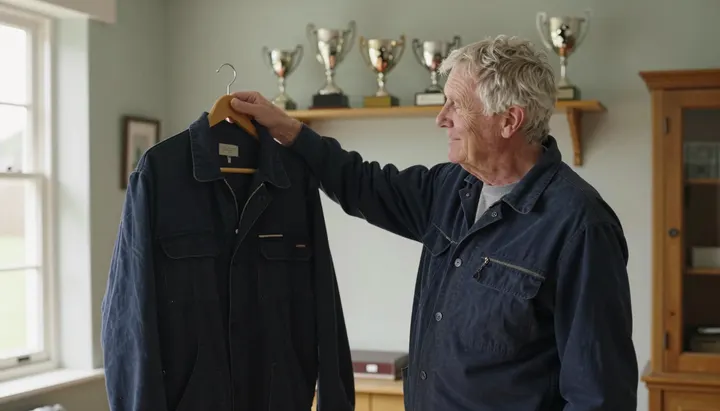
So the aim is not to cut those connections. It's to carry them in a lighter form: one that fits in a smaller home, and that you can actually see and enjoy.
Set the conditions first
Much of the pain in sorting sentimental things comes from doing it at the wrong time, in the wrong way. So before you open a single box, set yourself up kindly.
Do sentimental things last. If you're clearing a whole house, sort the loft, the garage and the kitchen first. By then you'll have practised making decisions on things that don't make you cry. Even within sentimental things, start with the easier ones: Christmas cards from people you barely remember are a gentler beginning than letters from a late husband or wife.
Choose the time carefully. Daylight, not late at night when everything feels heavier. Not on a birthday, an anniversary or any date that's already hard. One hour is plenty for a session.
Think about company. Some people prefer to do this alone; many find it easier with someone beside them. If you ask someone, be clear about their job.
That one sentence can save a lot of tension, especially with adult children, who may mean well but want to move faster than you do.
Gather by kind, not by room
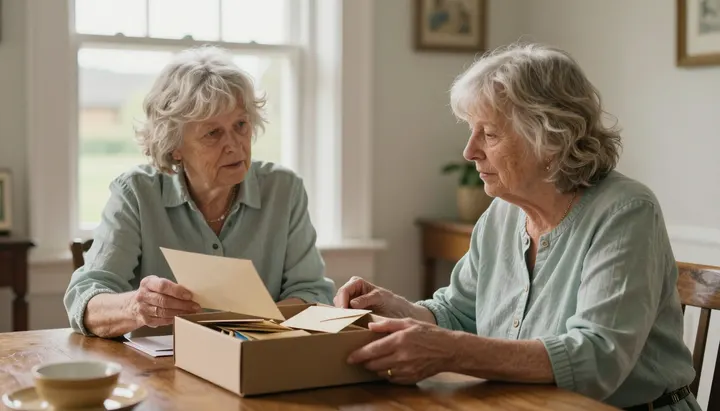
Sorting room by room makes every item feel precious. So sort sentimental things by kind instead. Gather all the letters and cards from every drawer in the house, together. All the children's artwork together. All of one person's clothes together. Then sort that one group in one sitting.
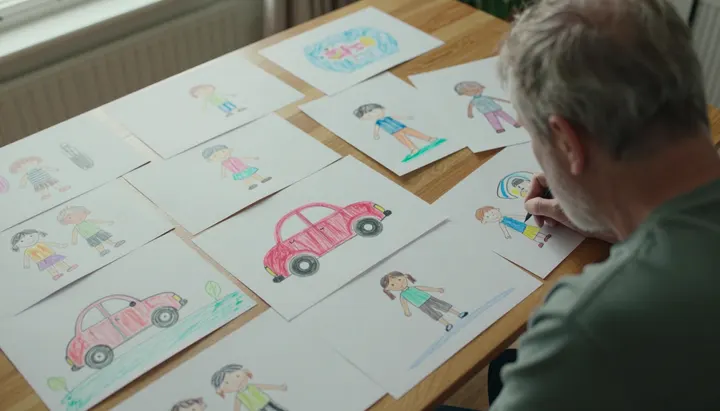
Why? Because when you see everything at once, the best pieces stand out. You might have sixty drawings by your son. Seen one at a time, each feels precious. Seen together, you can easily spot the five that truly make you smile.
A practical rule for cards: keep the ones where someone wrote more than their name, such as a real message, a bit of news or a joke. A card that only says "Best wishes, Jean" has done its job.
Think of the difference between a storage cupboard and a museum. A storage cupboard keeps everything. A museum shows a few carefully chosen pieces, and that's exactly why people love to visit. You can be the curator of your own family's museum.
Choose the container first
"Do I keep this or not?" is hard to answer over and over again. So choose your container before you choose what goes in it. This may be the most useful idea in this whole guide.
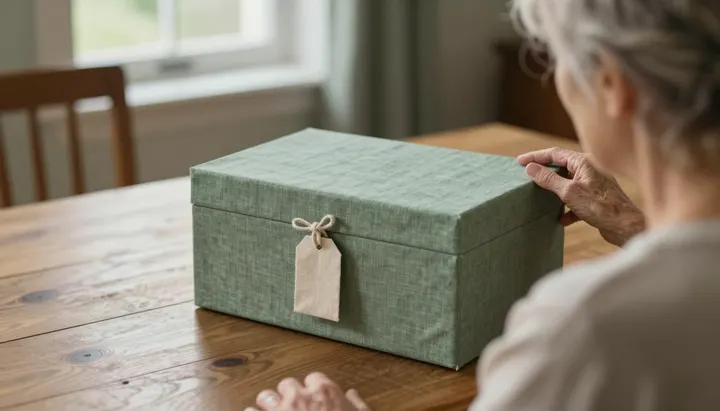
Decide on one good-looking box for each person, or for each chapter of your life: one for each child, one for your wedding and early married years, one for your parents. Make sure the boxes will fit in the new home.
Then let the box make the decision. When it's full, it's full. If you want to add something new, something else has to come out. You're no longer judging each object as "good enough"; you're choosing the best ones for the space. Many people find that surprisingly freeing. "Is this one of the best things for my box?" is a much easier question.
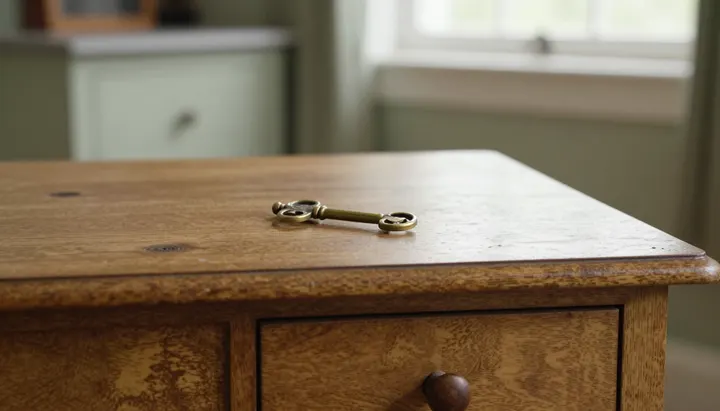
What about things too big for any box, like a piano, a rocking chair or a writing desk? Many people keep a small part of the whole: the key to the desk, a single drawer knob, a cushion cover from the chair. Something you can hold in one hand.
Photograph it, and tell its story
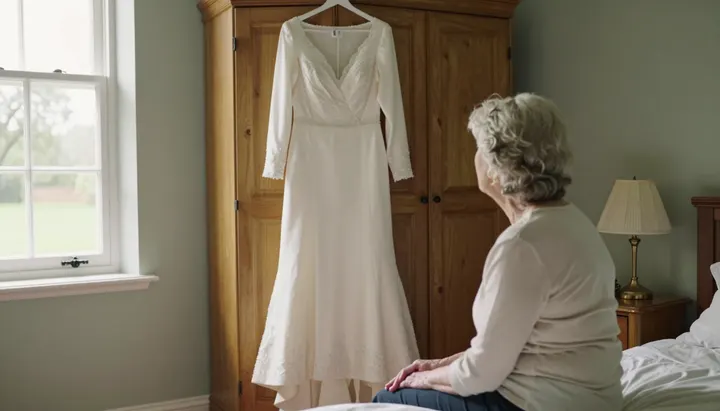
Now for the things that matter, but not quite enough to keep. The technique with some of the best research behind it is to photograph the object and write down its story.
In a study published in 2017, researchers ran a donation drive in six university residence halls in the United States, with nearly 800 students. In some halls, the signs simply asked students to donate things they no longer needed. In others, the signs suggested taking a photo of sentimental items first, to keep the memory, and then donating them. The halls with the photo message collected more: 613 items, compared with 533.12
In their other experiments, the researchers found the reason underneath: keeping the memory reduced the feeling of losing part of yourself. They were honest about the limits, though. One of them noted that it might not work for something deeply precious, a wedding dress for example.2 So use it for the middle ground.
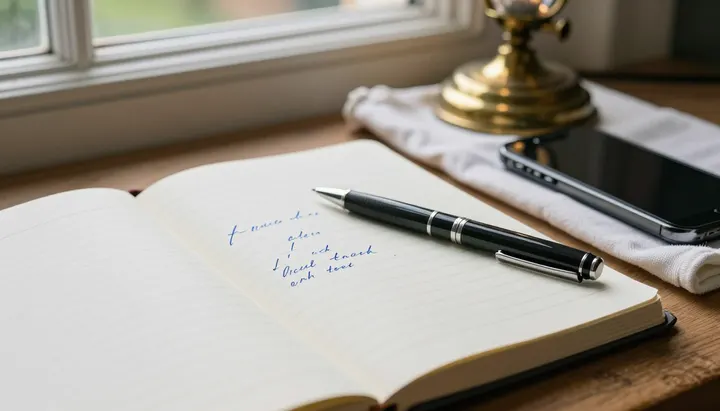
Later, you could print them as a small memory book. A single book can hold a hundred objects, and it fits on one shelf.
Use it, or display it
Some things don't need to go in a box at all. They need to come out of one.
If you've kept your mother's best teacups wrapped in newspaper for twenty years, consider using one every morning. If you have a scarf you love but never wear, wear it. Memory works best when you meet it often.
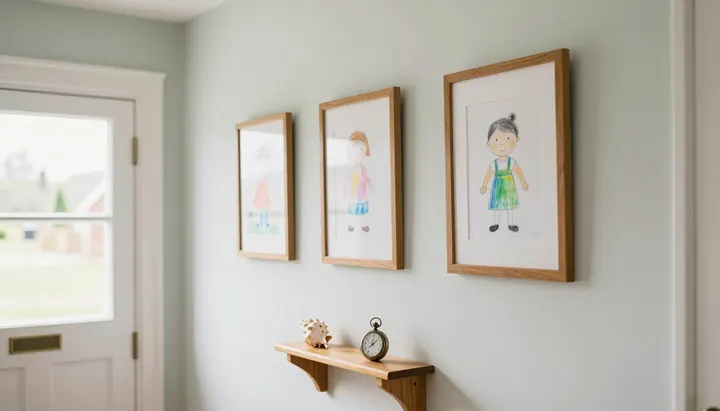
Choose one or two things and give them pride of place: a frame for the best of the children's drawings, a small shelf for a few treasures. A few things on display are seen and enjoyed every day. A hundred things in boxes are seen once a decade.
Some people turn textiles into something new. A favourite set of shirts can become a cushion or a quilt; a few squares of a baby blanket can be framed. That's not losing the memory. It's giving it a new shape.
Give it a meaningful new home
For the things you won't keep, think about where they'll go next. Letting go is so much easier when you know who will use something. A sewing machine might go to a niece who's learning to sew, woodworking tools to a community workshop, your father's old photographs of the town to a local history group, which may be delighted to have them.
When you give something, pass on its story too. Say a sentence or two about where it came from, or tuck a card inside. The object leaves, but the memory travels with it, and someone else gets to add to it.
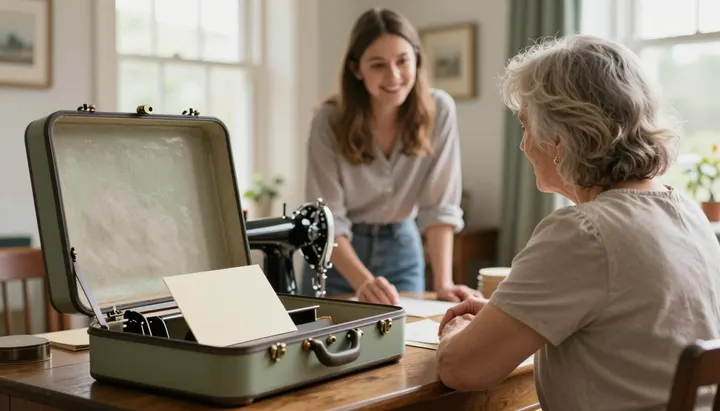
About the gifts you feel guilty letting go of: a gift has done its job once it's been given. The person who gave it to you wanted you to feel loved, not to feel burdened by it for the rest of your life.
If you're keeping your grown-up children's school reports, medals and teddy bears, remember that those memories are partly theirs. Offer them back. Many adult children are touched to receive a box of their own childhood, and some will quietly do their own sorting.
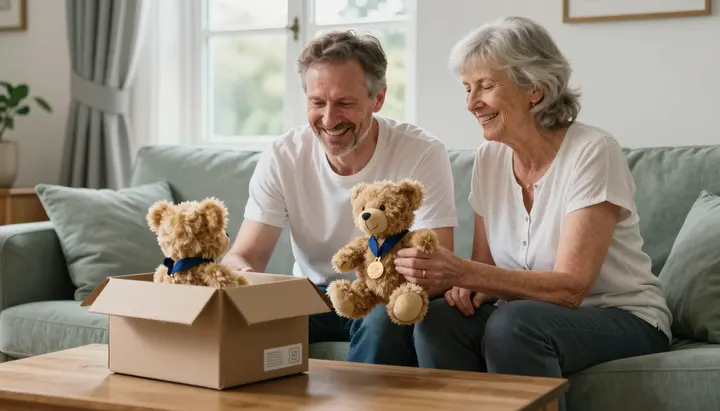
The same is true of things you inherited. You're allowed to keep the memory of your grandparents without keeping all their furniture. You don't have to be the family's warehouse.
The "not yet" box
Some things you simply can't decide about today, especially if you've lost someone recently. For those, use a "not yet" box.
Put the things inside, close the lid and write a date on it, perhaps six months or a year ahead. Then put it somewhere you won't see it every day. When the date comes, open it and ask again. Often the answer is clearer.
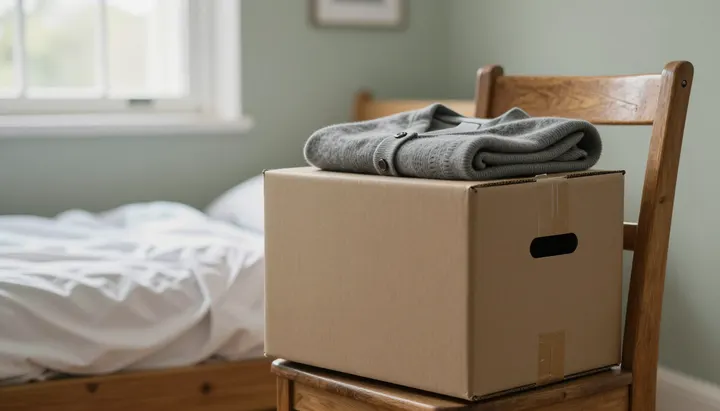
The "not yet" box isn't failure. Grief doesn't keep to a moving schedule, and some decisions really can wait. Just be honest with yourself about which box is "not yet" and which is "never".
Photographs: a three-pass method
Photographs deserve their own method, because there are usually so many of them. Try three passes.
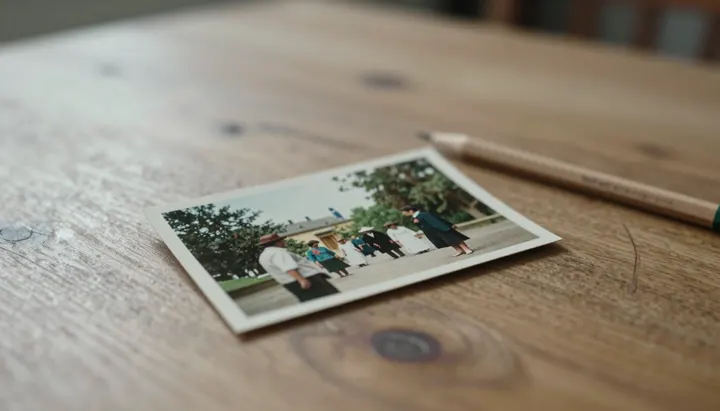
Of the three, the labelling pass is the one future generations will thank you for most.
Putting it together
Here is how it might look. Imagine a widower (we'll call him Tomás, but he's made up) whose late wife, Elena, loved to sew. Her sewing room is full: fabric, patterns, tins of buttons, her machine, and her cardigans on the back of the door.
Tomás doesn't start there. He sorts the garage and the kitchen first. Then, on a bright morning, with his sister beside him to listen, he spends an hour in Elena's room.
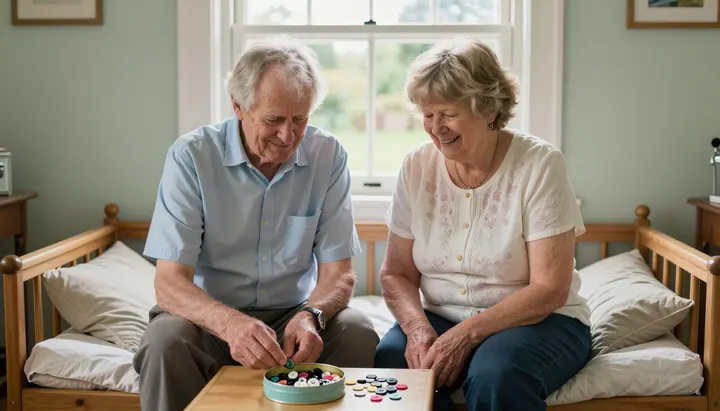
- The fabric goes to a local sewing group, with a note about Elena.
- The machine goes to their niece.
- He keeps one tin of buttons, and frames a photo of Elena at her machine.
- Her cardigans go into a "not yet" box, dated for next spring.
Nothing was forced, everything found a home, and Elena is more visible in Tomás's life afterwards, not less.
Your next step this week

Letting go of a thing is not the same as letting go of a person, or of a part of your life. The love and the memories stay with you. The object was only ever a reminder.
Is there one thing you're keeping, whatever happens? Tell us about it in the comments under the video on YouTube.